
Natural Landscaping in West Windsor: An Opportunity to Strengthen Public Policy and Collaboration
Over the past several months, West Windsor Township Council has spent considerable time discussing natural landscaping, meadow lawns, property maintenance, and the appropriate role of municipal government in regulating these practices.
What began as an effort to address complaints involving one residential property evolved into a much broader discussion about township-wide regulations, the adequacy and enforcement of our existing laws, and how the administration and Council work together to develop public policy.
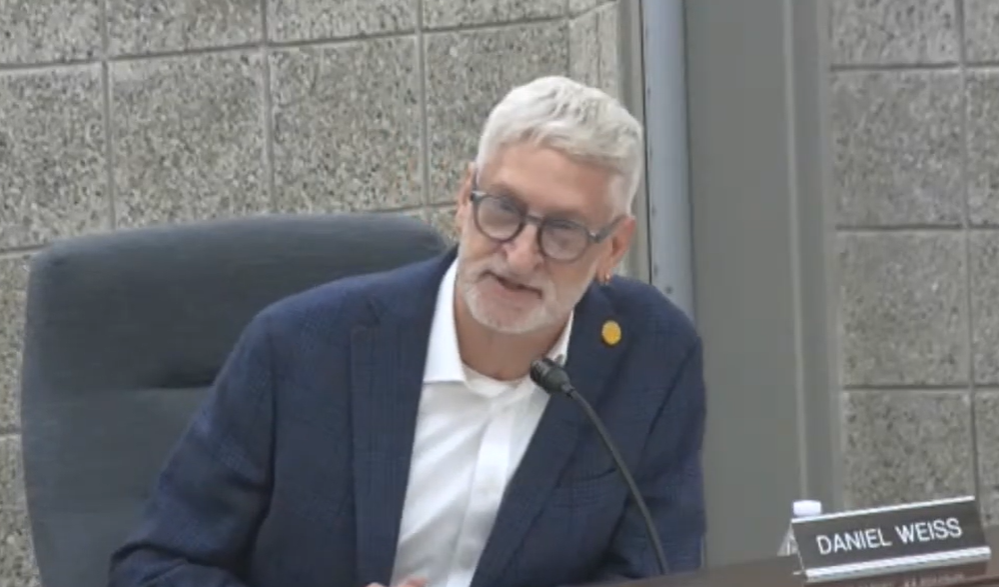
At our October 26 Council meeting, I shared my perspective on these issues and recommended a more comprehensive, collaborative approach to determining how West Windsor should address natural landscaping in the future.
I believe this experience offers some important lessons about how we govern, how we develop legislation, and how we balance competing interests within our community. It has also demonstrated the importance of clearly explaining how our municipal government operates, particularly the distinct responsibilities of the Mayor and Council.
Understanding the Roles of Mayor and Council
West Windsor operates under New Jersey's Mayor-Council form of government, with distinct executive and legislative branches.
Council is the legislative branch, responsible for considering, amending, and adopting municipal laws. The executive branch, led by the Mayor, oversees township administration, including the enforcement of those laws.
The Mayor has the authority to recommend legislation, advocate for policies, participate in Council discussions as permitted by law, and exercise statutory veto authority. Council has the independent responsibility to exercise its legislative judgment and conduct its own meetings within the requirements of state law.
These distinctions matter.
Council's business meetings are Council's meetings. They are not meetings of the administration.
While we welcome input from the Mayor and township professionals at Council meetings, the executive branch does not dictate what subjects Council members may consider in carrying out their legislative responsibilities.
Our system of government deliberately separates the authority to enact laws from the authority to enforce them, promoting accountability and preventing the concentration of governmental power.

But the existence of separate branches should not prevent cooperation. Quite the opposite. Effective municipal government requires the administration and Council to communicate openly, respect their respective responsibilities, and work collaboratively, particularly when developing policies that will affect residents throughout the township.
Council's legislative independence and collaboration with the administration are not competing principles. Both are essential to good government.
The Importance of Early Collaboration
Earlier this year, township staff developed a proposed ordinance that would establish new public policy regulating natural landscaping.
Council's first substantive discussion of the proposed legislation occurred at our September 15 meeting, when the administration shared a draft ordinance for consideration.
Council had not received a formal policy recommendation or memorandum from either the Environmental Commission or the administration outlining the need for new legislation, its proposed scope, or the alternatives that had been evaluated. Nor has any such documentation subsequently been provided to Council.
The initial proposal was developed before Council had an opportunity to help establish whether new regulations were necessary, what problems they should address, or what the desired policy outcomes should be.
There's nothing wrong with the administration identifying problems, researching solutions, and recommending legislation. These are entirely appropriate functions of the executive branch.
But when those solutions involve significant new public policy, I believe the legislative branch should be engaged early in defining the problem and evaluating possible approaches.
Consultation after a solution has already been developed is not the same as collaboration in developing that solution.
That distinction is at the heart of my concern.
Early collaboration does not require everyone to agree. Nor does it prevent the administration from exercising its responsibilities.
It helps ensure that township resources are directed toward solutions that reflect a shared understanding of the problem, the available alternatives, and the responsibilities of the respective branches of government.
After the initial discussion, there were subsequent Council discussions, written correspondence, and opportunities for public input. Those discussions were valuable and helped identify important differences in how we approached the issue.

Council members also provided substantive recommendations.
For example, following our September 28 Council business meeting discussion, I submitted a detailed written recommendation proposing specific amendments to the existing nuisance code, including actual ordinance language addressing sidewalk clearance, vegetation height, and visibility at intersections and driveways. That proposal was distributed to the full Council, Mayor, and administration on September 29.
These efforts reflected a genuine attempt to develop an alternative legislative approach, focused on public safety and enforceability rather than broad restrictions on landscaping choices.
The Difference Between Enforcement and New Legislation
Another important lesson concerns the relationship between the adequacy of our laws and how those laws are enforced.
The natural landscaping discussions were prompted largely by complaints concerning one residential property. Those complaints included legitimate concerns about maintenance, neighborhood appearance, public safety, and impacts on neighboring properties.
Residents deserve to have those concerns taken seriously.
But addressing a specific code enforcement problem is fundamentally different from establishing new regulations that could affect thousands of properties throughout West Windsor for decades to come.
The administration initially maintained that our existing nuisance code was inadequate to address the circumstances at that property. This was a central justification for pursuing new regulations.
Yet the enforcement history shows that the homeowner received numerous warnings dating back to April 2024, citing existing provisions of our municipal code. An extended period passed before a summons was issued.
Whether the existing provisions will ultimately prove adequate remains to be determined. The pending court proceedings may help clarify how those provisions apply to the specific circumstances involved.
Nevertheless, the history raises important policy questions: Are our existing laws adequate, and are there opportunities to improve how they are administered and enforced?
We need to understand both the adequacy of our existing laws and the effectiveness of their enforcement before concluding that additional legislation is necessary.
Throughout our discussions, Council members and residents raised questions about the need for new regulations and whether existing provisions could address the concerns. The discussions also highlighted areas where more specific language might improve clarity, consistency, and enforceability.

That was the purpose of the amendments to Section 115 that Council Member Linda Geevers and I developed and presented at the October 26 meeting. Rather than creating broad new regulations governing landscaping choices, we proposed targeted improvements to the existing nuisance code, particularly provisions addressing vegetation obstructing sidewalks, public passageways, and visibility at intersections and driveways.
Our goal was to strengthen public safety protections while avoiding unnecessary restrictions on how residents landscape their properties.
Those amendments did not receive sufficient support to advance.
A Shift in Approach
The administration has indicated that it no longer intends to pursue changes to Section 115 to address the complaints involving the property in question. Instead, it plans to rely on enforcing existing ordinances.
This represents a significant change from the position that originally prompted the effort to develop new regulations.
I welcome the administration's decision to focus on existing enforcement authority. It is an approach that Council members repeatedly encouraged throughout these discussions.
Whether the existing provisions will ultimately prove adequate remains to be determined, including through the pending court proceedings. But the decision to rely on those provisions reinforces the importance of thoroughly evaluating existing laws and enforcement practices before pursuing new legislation.
At present, no amendments to the nuisance code are moving forward.
That outcome does not resolve every question about enforcement or natural landscaping policy. But it provides an opportunity to distinguish the immediate responsibility to enforce existing laws from the broader question of what policies West Windsor may need in the future.
Disagreement Is Healthy. Confrontation Need Not Be.
Developing public policy inevitably involves disagreements.
Council members, township professionals, and residents bring different perspectives, priorities, and experiences to the discussion. That's not a weakness of representative government. It's one of its strengths.
The important question is how we manage those disagreements.
At times, the public discussion has taken on a more adversarial character than I believe is helpful when developing public policy.
While elected officials and the administration should be free to advocate for their positions, we should also be mindful of how official government communications are used, particularly when disagreements arise between the executive and legislative branches.
There's a difference between advocating for a position and using government resources and platforms to place pressure on another branch of government.
Likewise, there is a difference between providing opportunities for public comments and creating a collaborative process in which different perspectives meaningfully inform the development of policy.
We shouldn't be pitting neighbors against neighbors, residents against Council, or the administration against Council simply because of differences in opinion.
Instead, we should be bringing people together, sharing information openly, identifying areas of agreement, and working through differences respectfully.
That requires transparency, including advance communication about substantive proposals, access to relevant supporting information, and meaningful opportunities for residents and their representatives to participate.
It also requires respecting the work and perspectives of people with whom we disagree.
I genuinely believe everyone involved wants what is best for West Windsor.
But good intentions don't eliminate the need for good process.
Even when we disagree, we have a responsibility to respect the transparency, collaboration, and institutional boundaries that effective government requires.
Natural Landscaping Deserves a Broader Evaluation
There is a legitimate need for West Windsor to undertake a thoughtful, comprehensive evaluation of whether we should establish guidelines for the use of natural landscaping and meadow lawns on residential properties, and what those guidelines should look like.
This is not a simple issue.

There are genuine considerations involving property rights, neighborhood character, maintenance expectations, public safety, and the effects of landscaping practices on neighboring properties.
There are also important environmental considerations, including alternatives to conventional lawns, stormwater management, biodiversity, and pollinator habitats.
These interests need to be understood and balanced, along with the practical challenges of fair and consistent enforcement.
I do not believe we should attempt to develop a comprehensive natural landscaping policy through a series of isolated nuisance code amendments.
Nor should our policy-development process begin with the assumption that a new ordinance is necessarily the answer.
Instead, we should begin with a comprehensive evaluation of the issues, informed by research, professional expertise, and meaningful public participation.
The objective should be to determine what guidance, policies, or regulations, if any, would best serve West Windsor.
My Recommendation: A Funded Natural Landscaping Task Force
At the October 26 Council business meeting, I recommended that West Windsor establish a formal project to undertake this evaluation.
I envision a well-defined, time-limited initiative with a clear scope, dedicated independent professional resources, and the objective of producing specific, actionable recommendations.
This would not be another permanent township commission. Rather, it would be a structured project or task force with three principal components.
Independent professional leadership. A qualified consultant or consulting team with expertise in municipal land use, environmental practices, and regulatory policy would manage the project. The consultant would research relevant laws and existing ordinances, examine approaches taken by other municipalities, evaluate regulatory and nonregulatory options, facilitate public engagement, and develop recommendations.
Using independent professional resources is not a criticism of township staff or their capabilities. Our employees already have substantial operational responsibilities. Their expertise and participation would be essential, but a project of this scope deserves dedicated leadership rather than adding another major initiative to their existing workload.
A diverse advisory group. The project would benefit from participation by members of the Environmental Commission, Shade Tree Commission, Planning Board, Zoning Board, subject matter experts, and residents with different perspectives, including those who practice natural landscaping and those concerned about its impacts.
The advisory group would help identify issues, evaluate findings, and provide input throughout the process.
A collaborative steering committee. Council and the administration would work collaboratively as a steering committee, establishing the project's objectives and scope, determining the necessary resources, and overseeing its progress and recommendations.
An essential component would be meaningful and transparent public participation, beginning early in the project rather than waiting until recommendations have already been developed.
The project should ultimately produce a comprehensive report documenting the research, findings, alternatives considered, and recommendations, providing a sound basis for determining the most appropriate path forward for West Windsor.
That path might include voluntary guidelines, educational resources, targeted amendments to existing regulations, a more comprehensive ordinance, or improvements to enforcement practices.
The outcome should be determined by the evidence, professional expertise, and community input - not by a solution selected in advance.
Looking Ahead to 2027
A project of this nature will require an investment.
But given the potential impact of natural landscaping policies on property owners for years to come, I believe that investment is justified.
I recommend that Council begin considering this initiative as part of our 2027 municipal budget discussions, allowing us to define the project's scope, identify the required expertise, establish a reasonable budget, and develop a realistic schedule.
With clearly defined objectives, dedicated project leadership, and appropriate oversight, we can develop thoughtful, actionable recommendations that provide a sound foundation for the future.
There is no need to rush into another regulatory proposal. But neither should we abandon the broader policy discussion simply because the immediate effort to amend our nuisance code has ended.
Acknowledging Our Community
I want to thank the many West Windsor residents who have contributed to these discussions over the past several months.
I've heard from people who strongly support natural landscaping, those who have significant concerns about its impacts, and many whose perspectives fall somewhere in between.
I also appreciate the time and effort of my Council colleagues, township staff, and members of the administration.
These discussions have not always been easy. But they have demonstrated how much residents care about their neighborhoods, their environment, their property rights, and the quality of local government.
I hope we can build on that engagement to develop a more thoughtful and collaborative approach to natural landscaping policy - one that respects the different interests within our community and reflects the standards of good government our residents deserve.
Watch my October 26 Council remarks: West Windsor Township Council meeting — remarks begin at 42:20

Comments